Overview
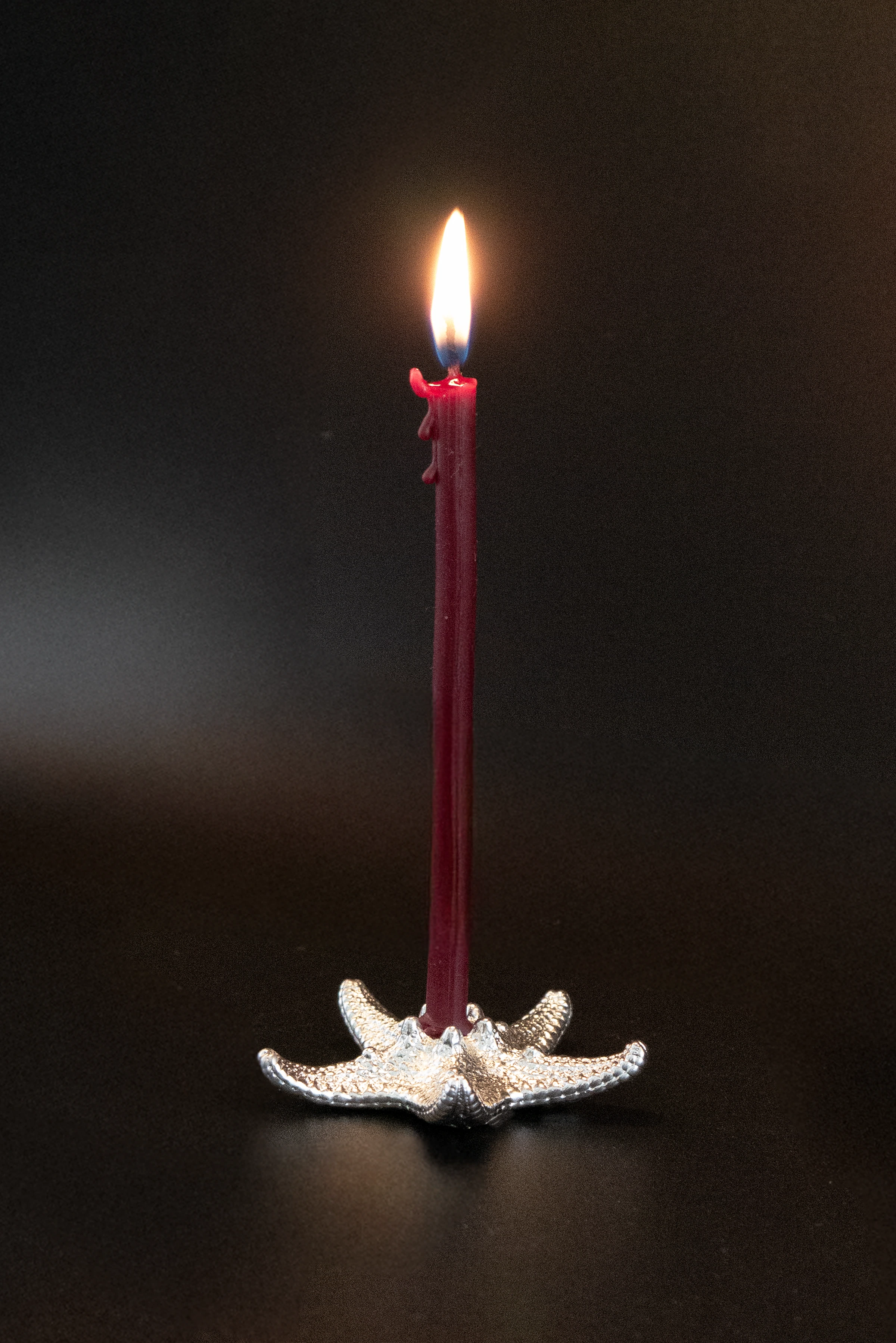
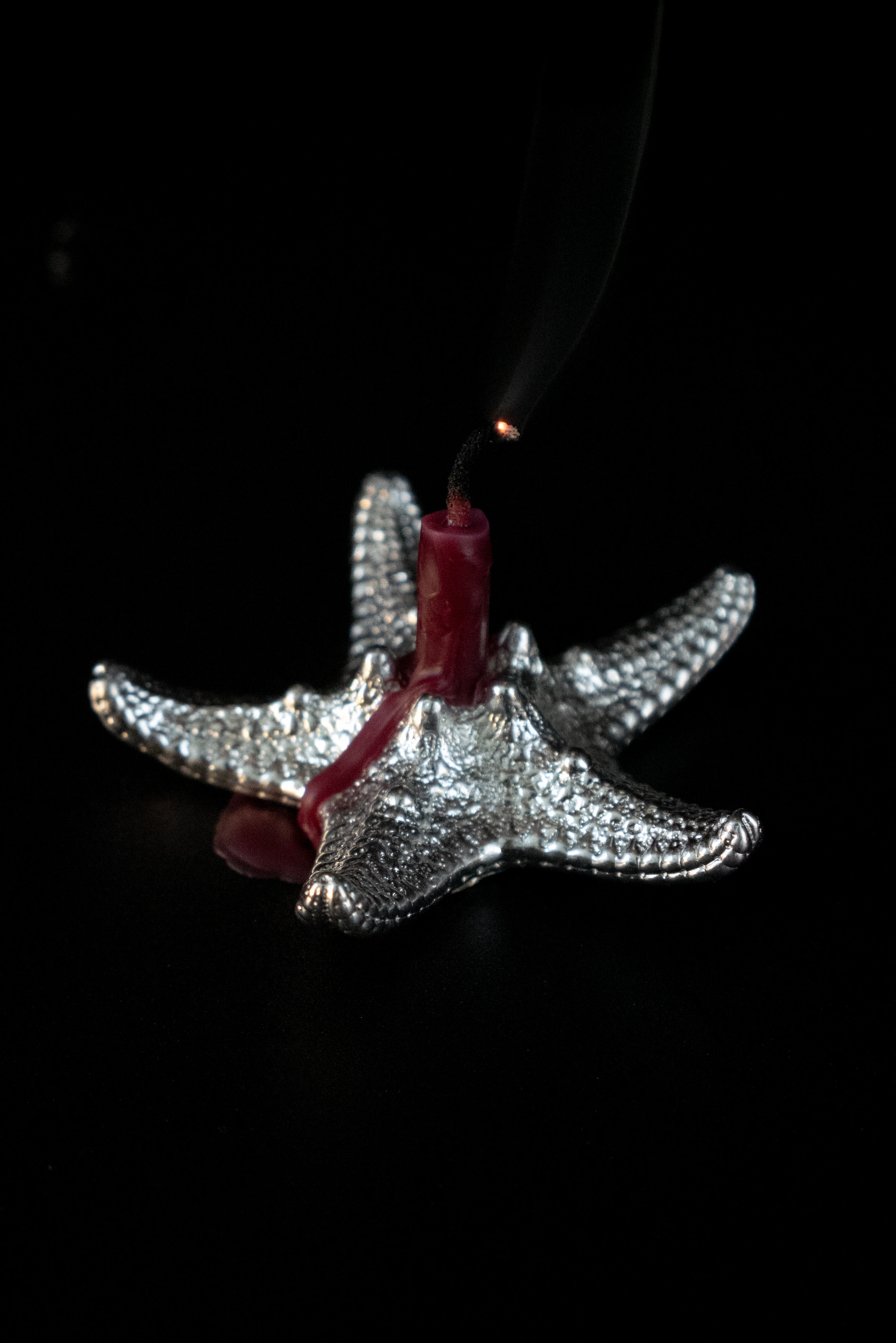
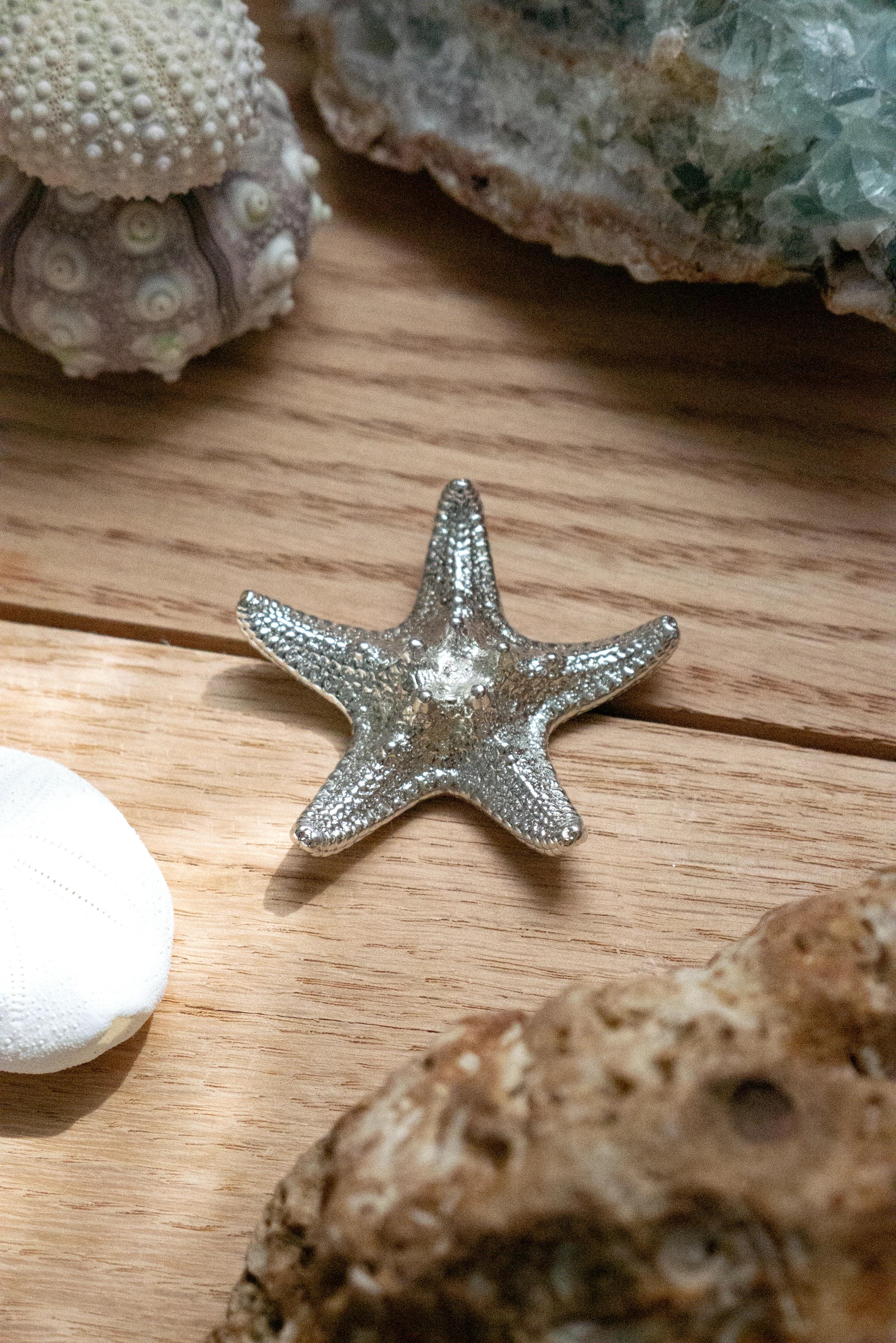
A star and its flame. The skeleton of the chocolate chip sea star (Protoreaster nodosus), cast in recycled tin-copper. This species is native to the shallow waters of the Indo-Pacific, where it moves slowly across sandy lagoons and seagrass beds, feeding on algae, sponges, and small invertebrates. It contributes to the health of its habitat, and is considered an indicator species for ecological decline.
Details
Despite its importance, the species is better known in death than in life. The chocolate chip sea star is harvested en masse and sold as one of the most popular decorative objects in craft and shell shops around the world. In Singapore, the species is now listed as endangered, and heavy collection has thinned populations elsewhere.
The marine-life trade exists for several reasons. For many coastal communities, the collection and export of marine creatures provides critical income. For shell collectors, the desire to preserve and live alongside the beauty of the ocean is an ancient, very human practice. Shells and other marine objects carry longstanding cultural, aesthetic, and personal value.
Yet the impact of this trade on marine ecosystems is often invisible within the system of collection, exchange, and consumption.
This piece explores an alternative: capturing the rich detail of the species' form with minimal extraction. After a single skeleton is cast, it can be replicated as often as needed using recycled material, while living sea stars remain in the water.
Additionally, the piece invites a shift in perspective about the meaning and memory of harvested marine life. A shell shop is also a graveyard. In Flaming Star, the shift from living creature to utilitarian object is exaggerated: the imprint of a sea star's life becomes its own votive.
View in the shop, or inquire at request@kateander.com.