
Overview
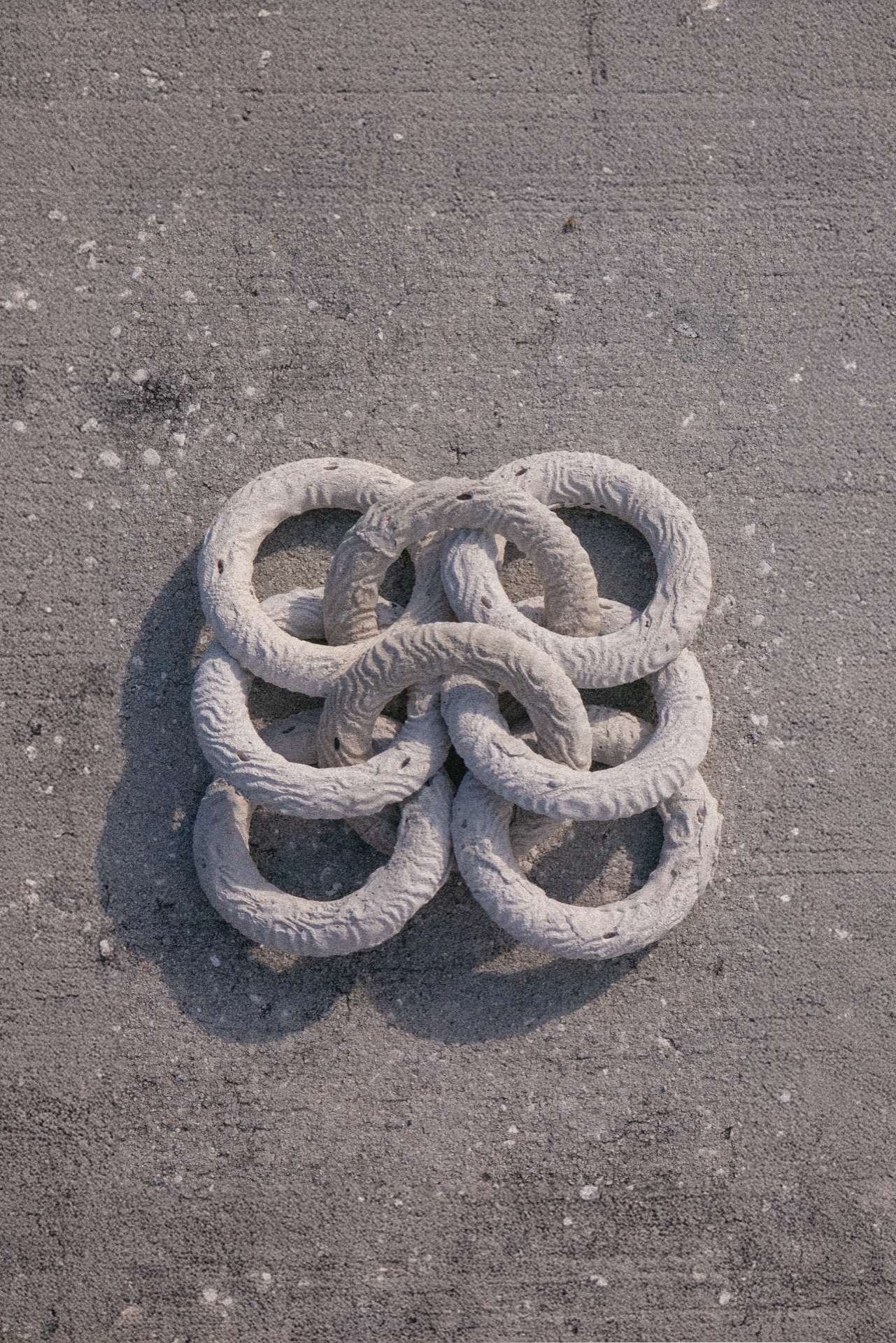
Oystercatcher: A kinetic concrete substrate for oyster reef restoration in Florida's intertidal areas.
Florida's intertidal zones have experienced an estimated 80-90% loss of their historic oyster reef habitat.1 The statewide impact of this loss puts coastlines and water quality at risk, impacts exacerbated by continued land development and population booms. Between 2020-25, over one million privately owned residential construction permits were released in Florida, an amount ranking among the highest in the nation.2 As a result, there is an increasing interest in scalable, permit-free restoration tools, particularly in areas with privately developed waterfronts and abundant oyster shell waste.
Permit-free restoration efforts exist and are proven to support oyster growth, with current designs largely prioritizing affordable, accessible builds and deployment. However, private waterfront adoption can be a challenge to scale due to permitting restrictions and site-specific functional limitations, as well as the challenge of engaging public buy-in.
This research examines current solutions before proposing a design intervention that eliminates harmful materials, supports public buy-in, optimizes for long-term oyster recruitment, and is scalable in production.
Context
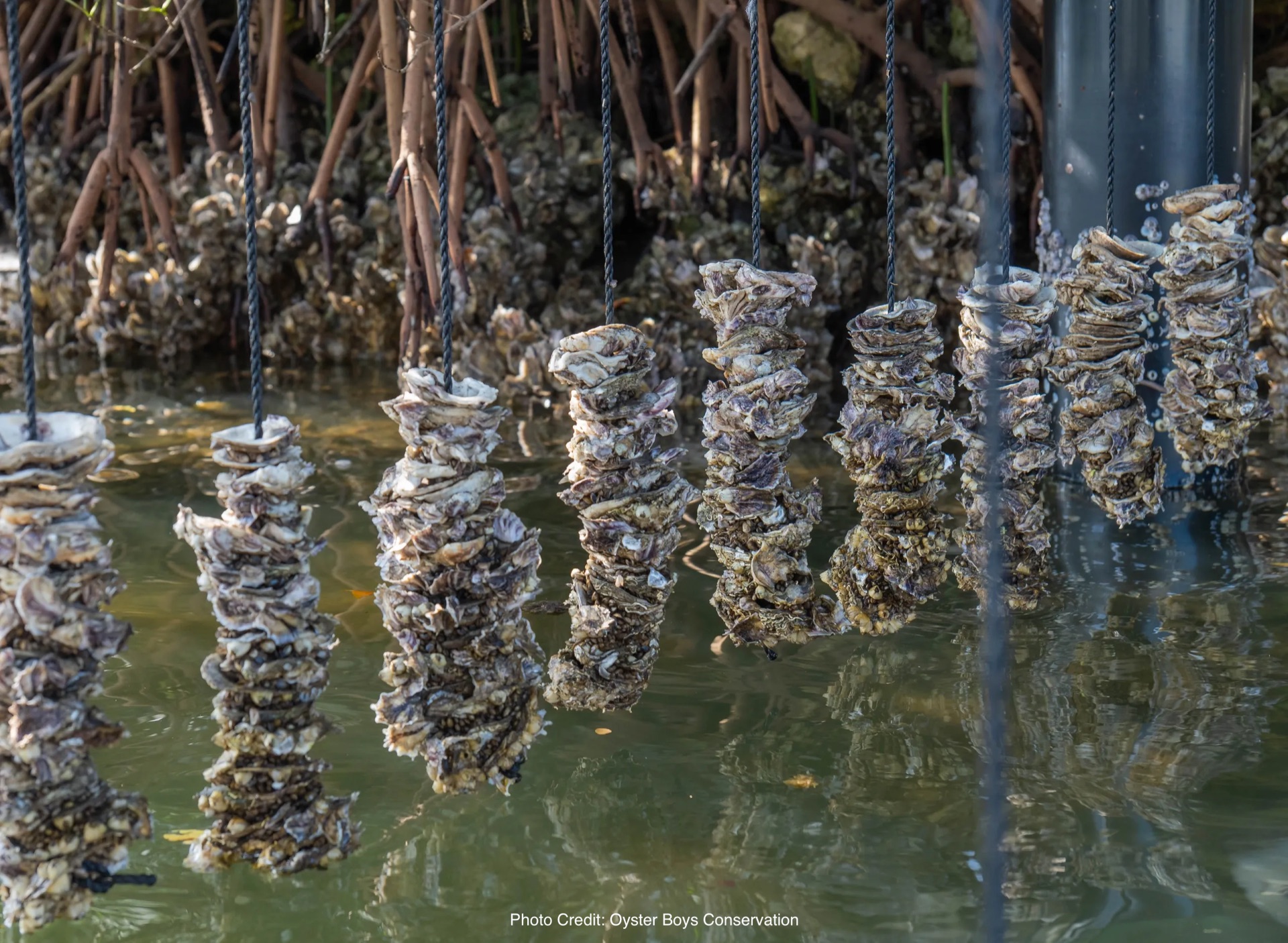
Vertical Oyster Gardens (VOGs) and Living Seawall tiles are popular and effective community-based restoration tools. The former is created by stringing recycled oyster shells vertically from docks to encourage spat recruitment, engage citizen scientists, and keep costs low.3 The latter is created by pouring reef-safe concrete into a mold, and attaching the design to a seawall via mount hardware. Seawall tiles are subject to strict environmental and permitting scrutiny as they are considered modifications to seawall, often requiring plans signed and sealed by a Florida-registered engineer,4 with strict FEMA and flood guidelines among other requirements.5 Living shoreline projects of this type must also coordinate with both the Florida Department of Environmental Protection and the U.S. Army Corps of Engineers.6 VOGs are generally considered small-scale habitat restoration because they are temporary and hang from an existing, permitted structure. For this reason, VOGs are exempt from permitting in Pinellas County, allowing private landowners to get involved with conservation freely.7
As VOGs scale and mature, the field has identified areas for continued development. The vertical, pendulum-like structure can be vulnerable to swinging and breaking in heavy wind and current. With a recorded 56% increase in biomass and 348% increase in oyster count within the first six months,8 the significant and rapid growth can also create load-bearing considerations for both the reef and its host dock over time. Living seawall tiles similarly show room for development. Their designs are often textured and grooved yet relatively flat, unlike the complex tangle of a natural reef or mangrove root system, prompting questions about the possibilities of a more complex, interconnected design. Their classification as a revision to seawall also creates hurdles for homeowners that would like to get involved, but don't have the time, resources, or knowledge to process permitting.
The proposed solution leverages the successes and constraints of these designs as a foundation to explore what the next-iteration hanging reef structure might look like. Key design criteria include optimized load distribution across the structure as biomass accumulates, biomimetic logic to support biodiversity, non-toxic material composition, and a deployment configuration that remains within existing permit exemptions.
Design Response
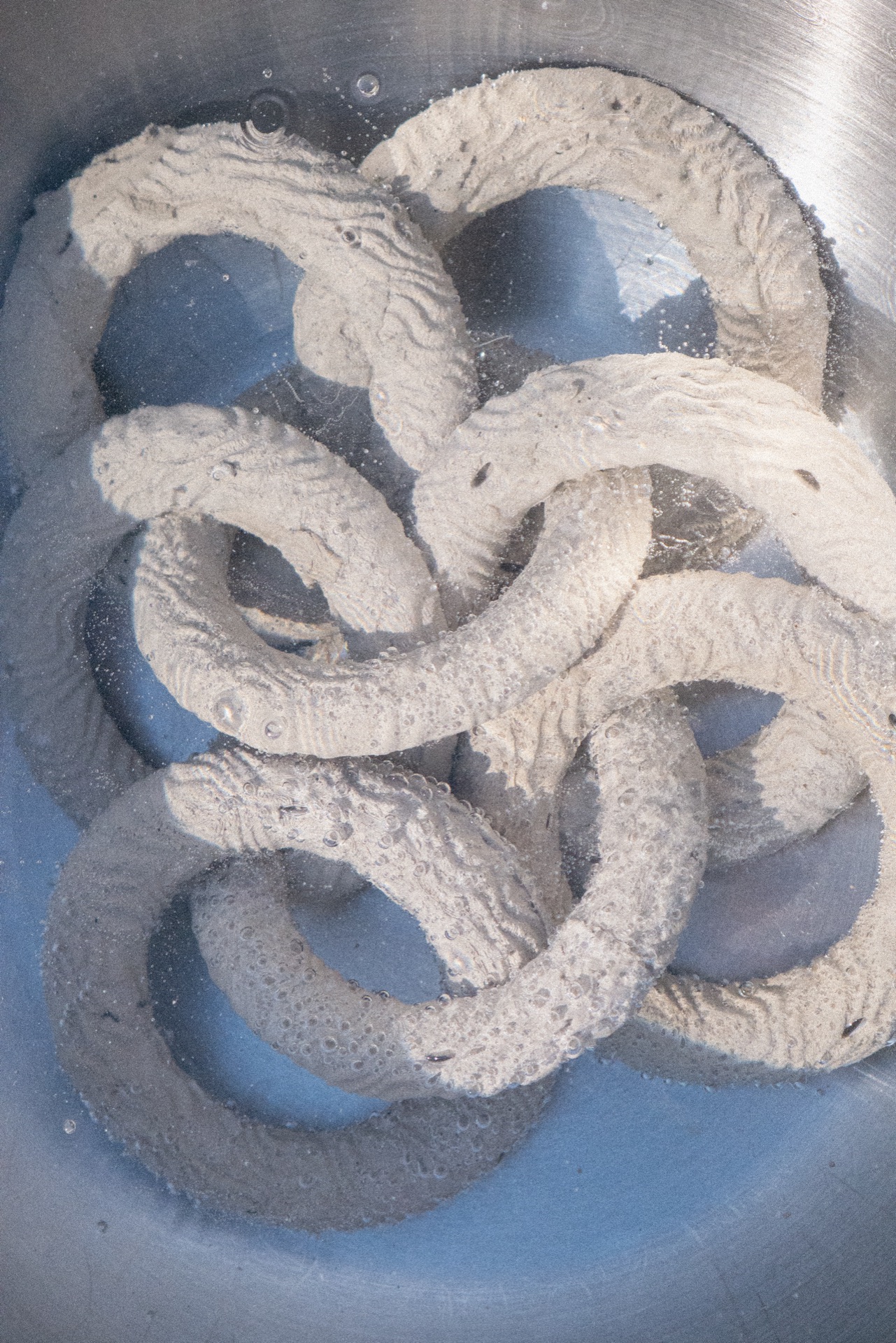
The Oystercatcher is a deployable reef substrate unit built from concrete chainmail. It is a flexible mesh of interconnected cast rings that drapes and conforms to the structure around it. The form responds to the structural logic of mangrove root systems, which are dense, irregular, and full of the sheltered interstices that juvenile oysters and small estuarine species prefer.
The chainmail system offers specific material advantages, including flexibility for transport and deployment, surface texture for spat attachment, and mechanics that absorb wave energy and distribute the weight of reef growth over time. The units are designed to be cast with reef-safe concrete, with molds that assist in easy assembly.
Details
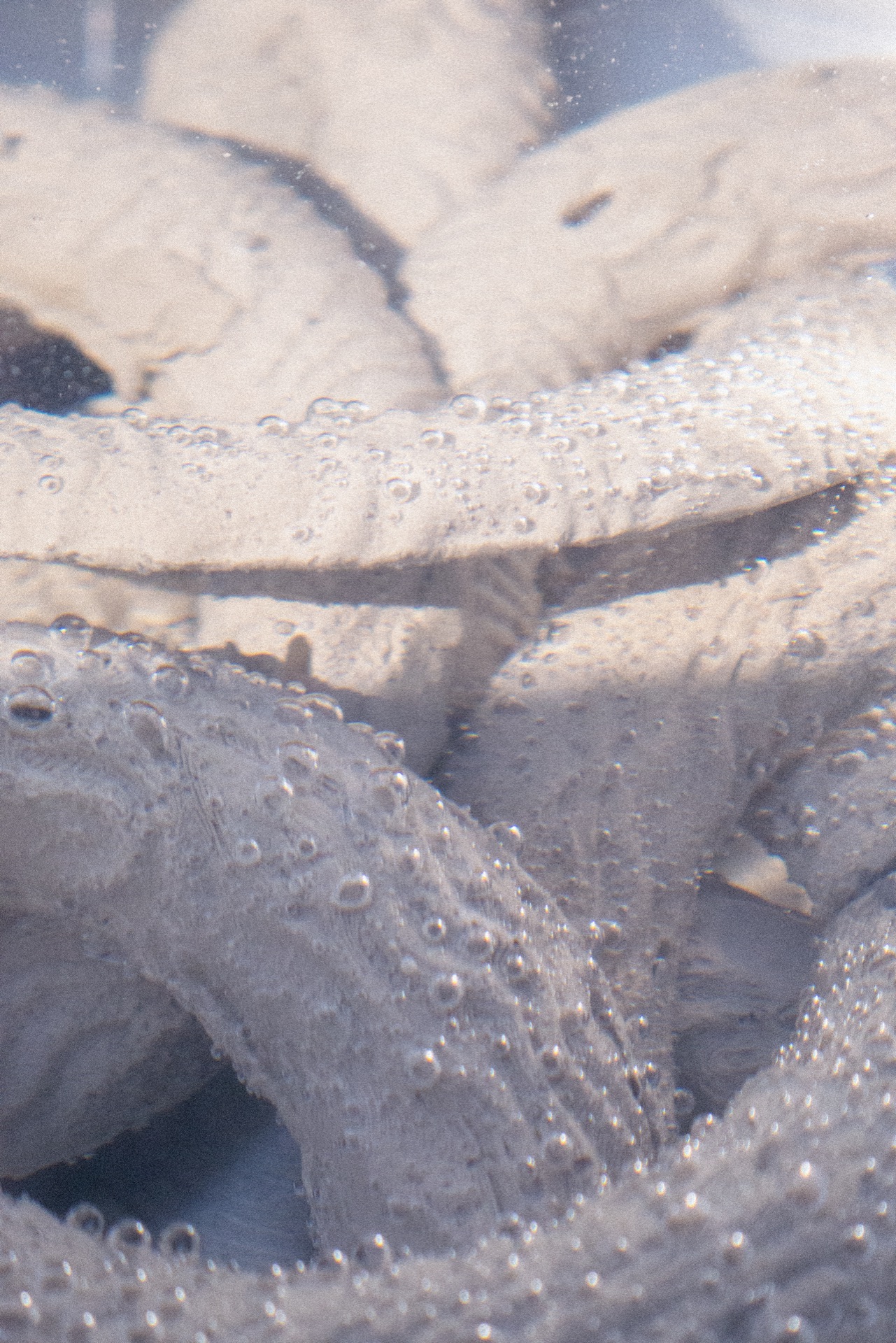
Each unit is cast from reef-safe concrete and measures approximately 6 inches in diameter. The rings are interlocked using the 6-in-1 chainmail pattern, which increases compression between contact points and reduces tension-related stress as the structure gains mass over time. Stainless steel wire reinforces the interior of each ring, providing structural integrity without introducing materials harmful to the marine environment.
The assembled chainmail is hung from screw hooks mounted directly onto a seawall or piling, suspending the structure in the intertidal zone without contact with the seafloor. As a small, temporary, suspended structure, without contact on the seafloor, the Oystercatcher does not constitute a regulated activity under Florida's Environmental Resource Permitting framework.6 This aligns with the regulatory treatment of Vertical Oyster Gardens as distributed through Tampa Bay Watch and UF/IFAS Sea Grant, which operate county-wide without permit requirements.7
Next Steps
Prototype units will be deployed in Tampa Bay in summer 2026 to document recruitment rates and biodiversity. We welcome conversations with restoration practitioners, marine biologists or other interested researchers: request@kateander.com.
Sources
- 1 Florida Fish and Wildlife Conservation Commission (FWC). Oyster Integrated Mapping and Monitoring Program (OIMMP). myfwc.com/research/habitat/coastal-wetlands/oimmp
- 2 US Census. Building Permits Survey (BPS) - Current Data (2019–present). census.gov/construction/bps/current.html
- 3 Gulf Shellfish Institute. Vertical Oyster Gardens. gulfshellfish.org/vertical-oyster-gardens
- 4 Foundation Masters LLC. Seawall Permits Florida. foundationmasters.com/seawall-permits-florida
- 5 City of Tampa. Residential Seawall Extension. tampa.gov/construction-services/residential-permits/seawall-extension
- 6 Florida Living Shorelines. Permitting. floridalivingshorelines.com/information-help-and-documents/permitting
- 7 Tampa Bay Estuary Program. Vertical Oyster Gardens. tbep.org/vertical-oyster-gardens
- 8 Oyster Boys Conservation. Venice Yacht Club VOG Research. oysterboys.org/post/venice-yacht-club-vog-research
Credits
Creative Direction, Research + DevelopmentKate Andersen
Monitoring + Research CollaborationAbby Hendershot, MNM