
Overview
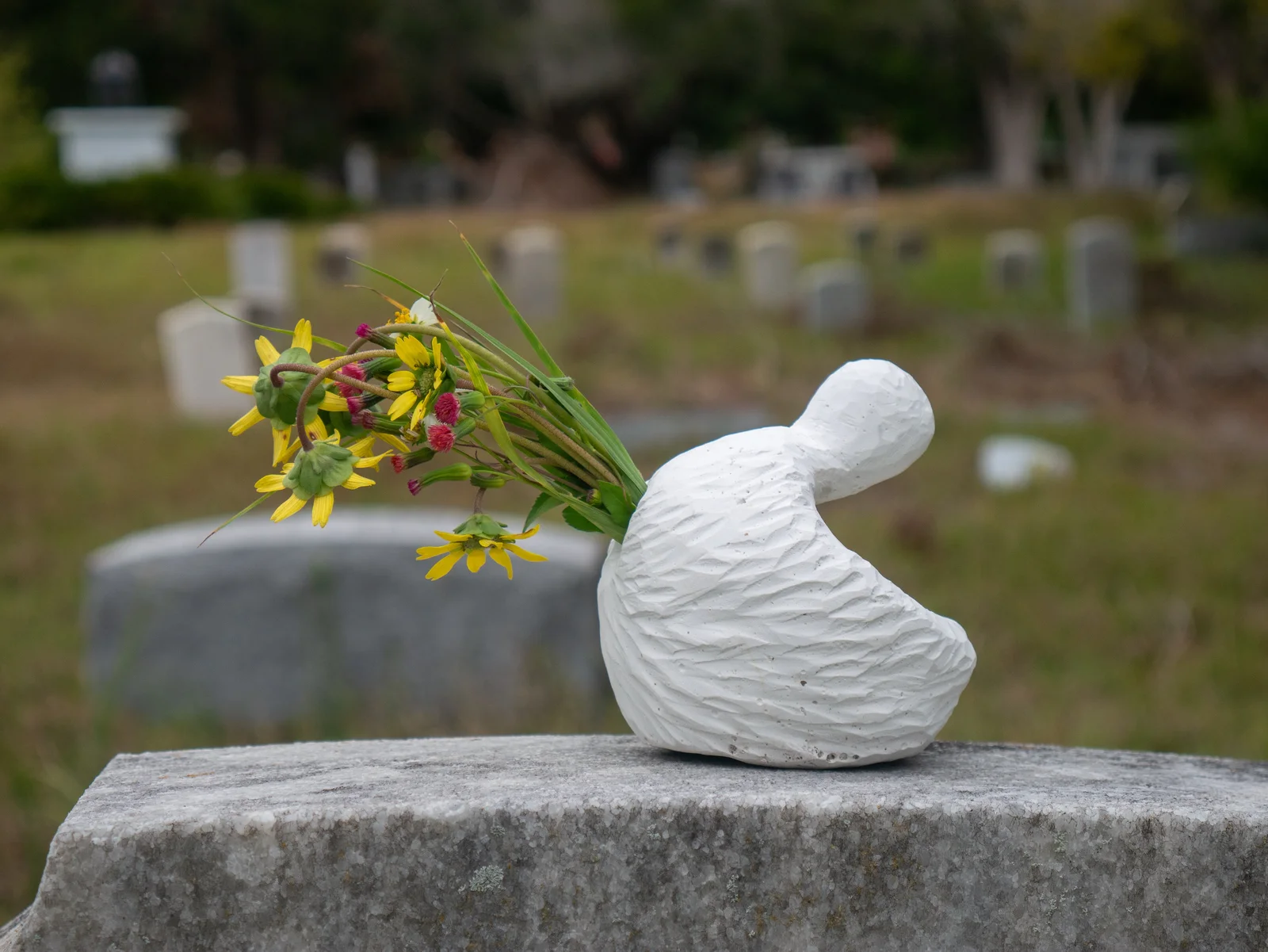
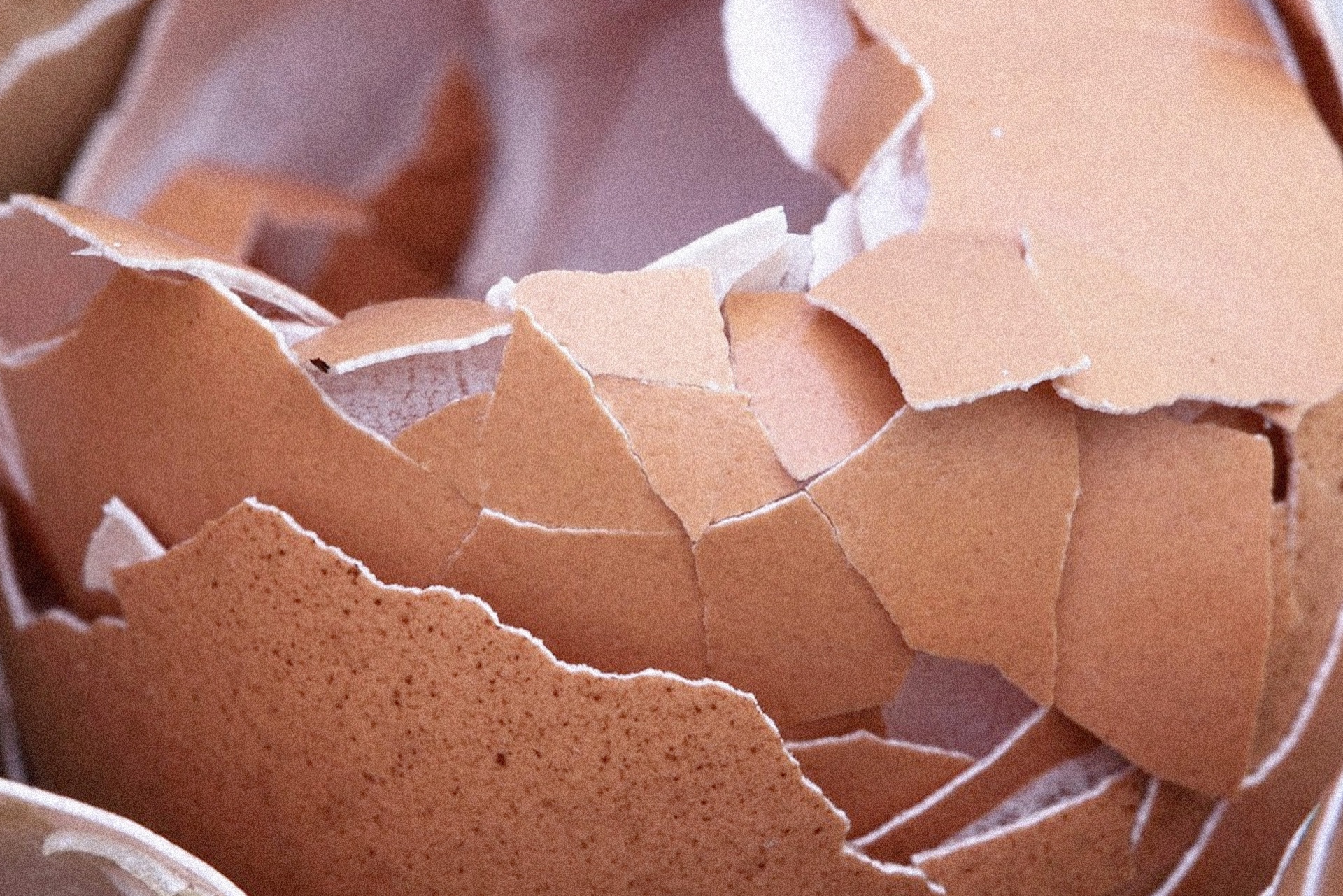
This research project began as an experiment in the potential of food-waste to create more sustainable flower and tribute vessels in the funeral industry.
During the process, we discovered that biodegradable materials may have the potential to transform how humans view objects, and redefine mourners' experiences with loss. The research culminated in a prototype object that demonstrates this exciting potential, detailed below.
Prompt
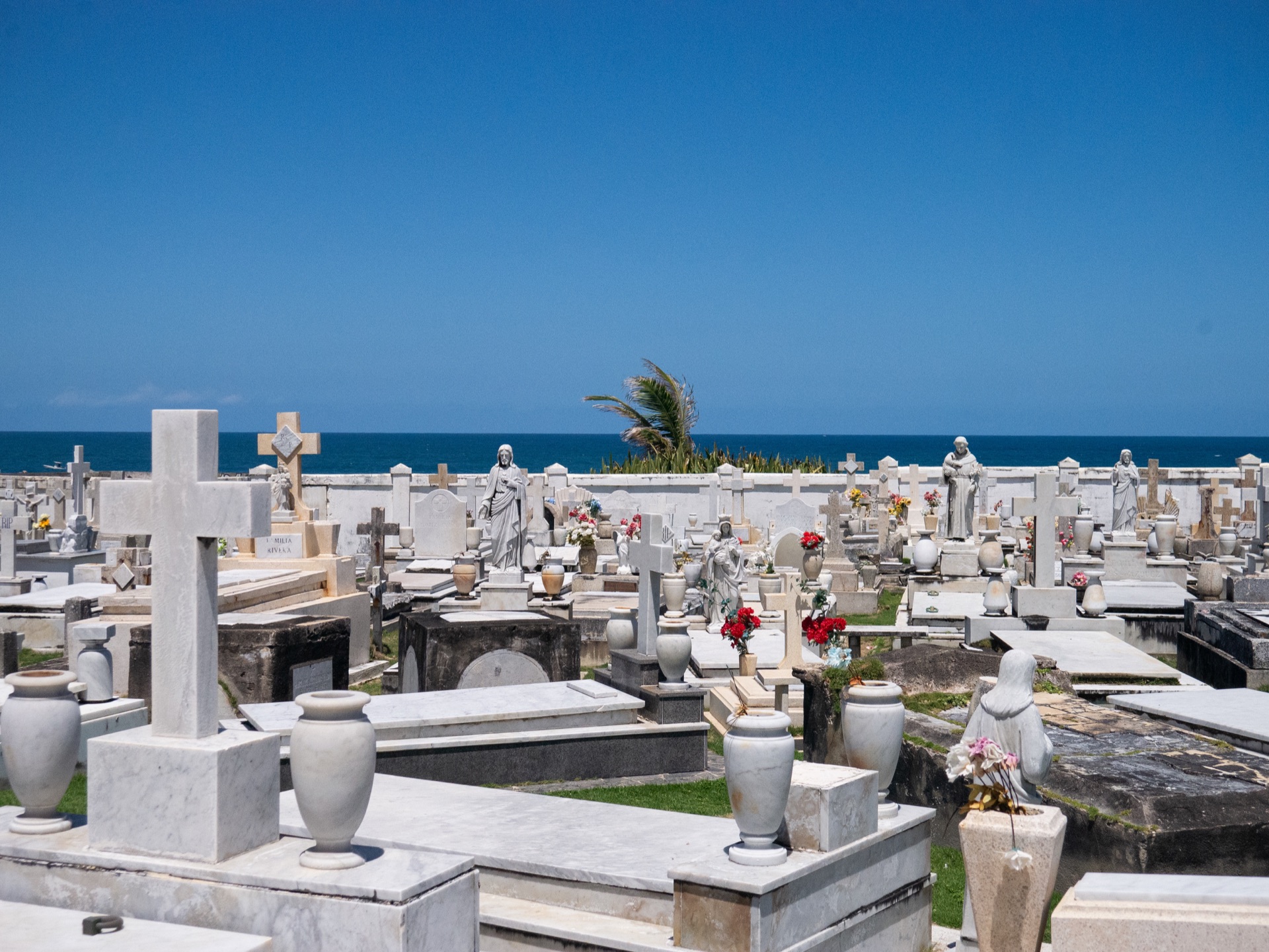
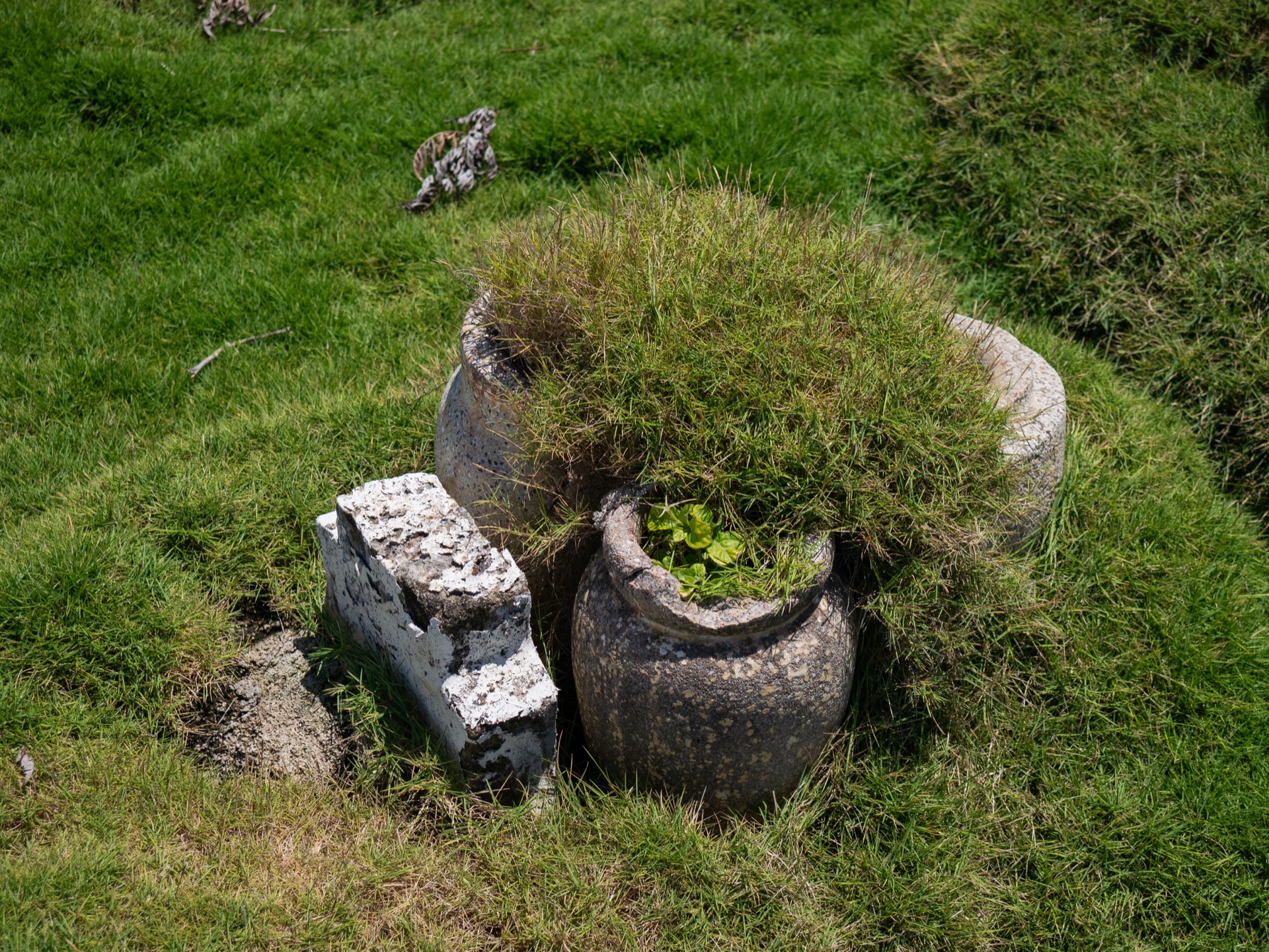
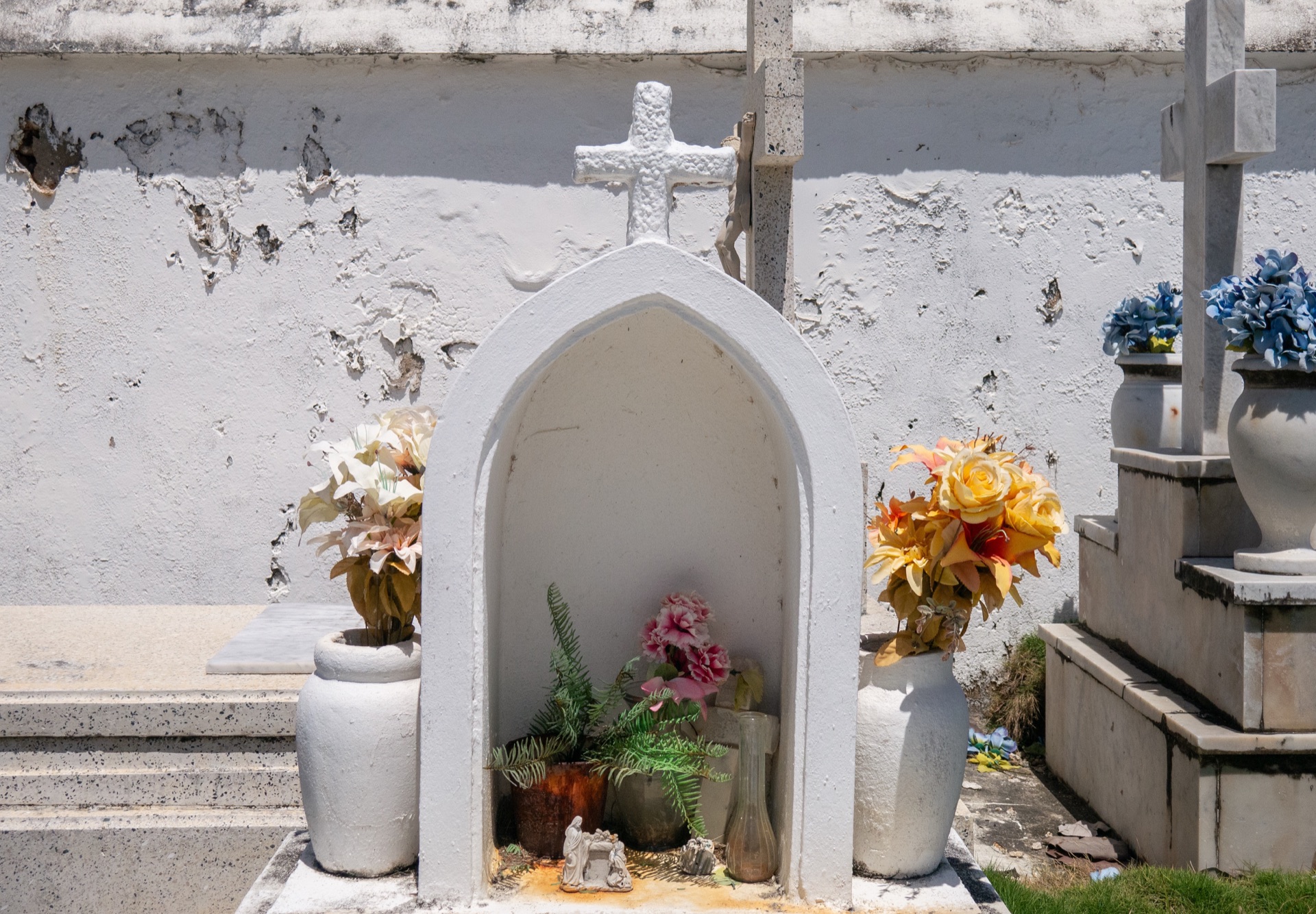
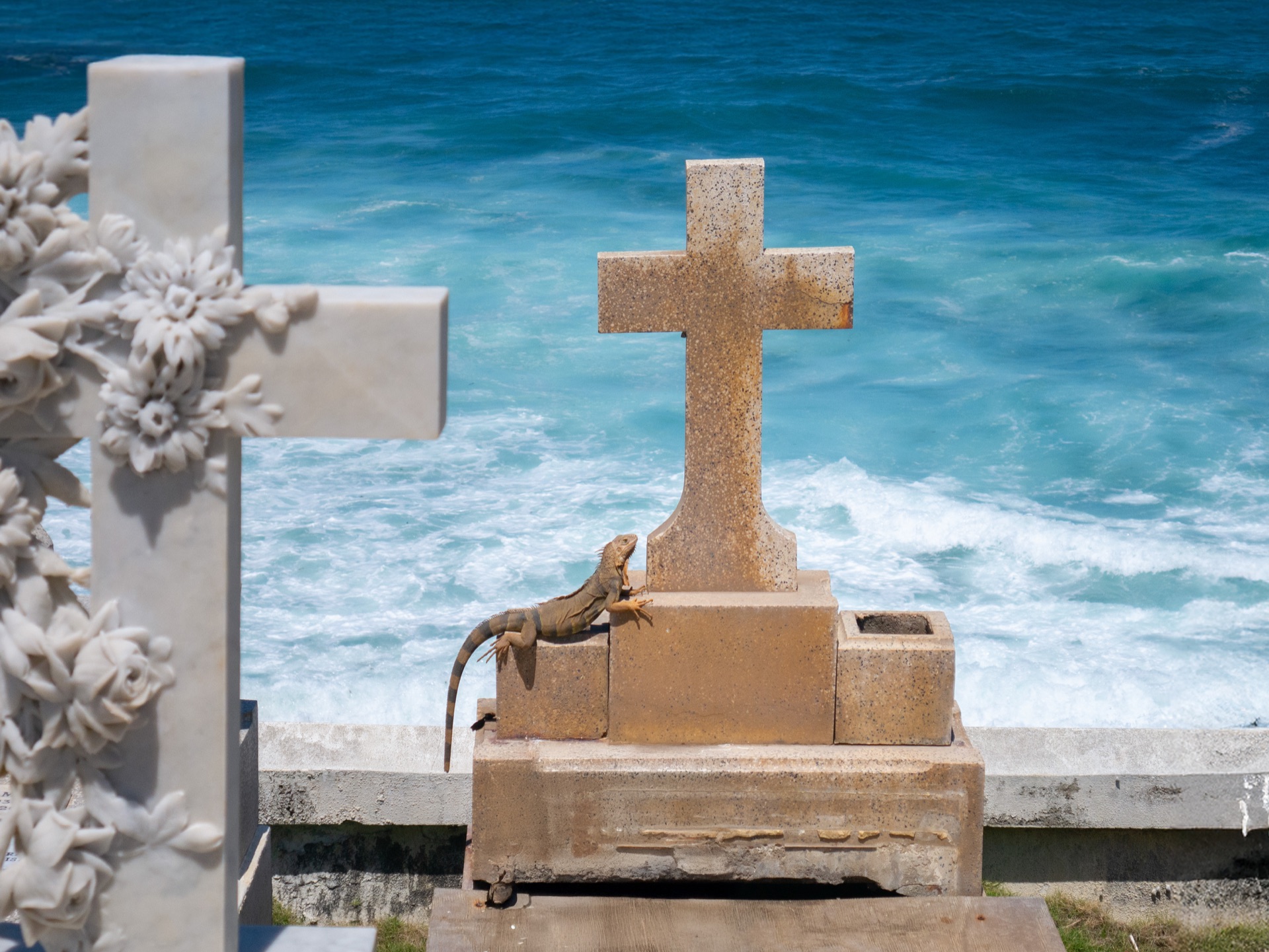
We sourced inspiration from the Santa Maria Magdalena de Pazzis Cemetery in Puerto Rico, a colonial-era Catholic cemetery nestled between Old San Juan and the Atlantic Ocean. The space is adorned with many unique and beautiful stone vases, often filled with plastic flowers, that stand the test of time against thrashing waves and strong winds.
This contrast between the ocean, a never ending force of change, and the enduring stone memorials, inspired questions about why we often honor memory through concepts of permanence.
Background
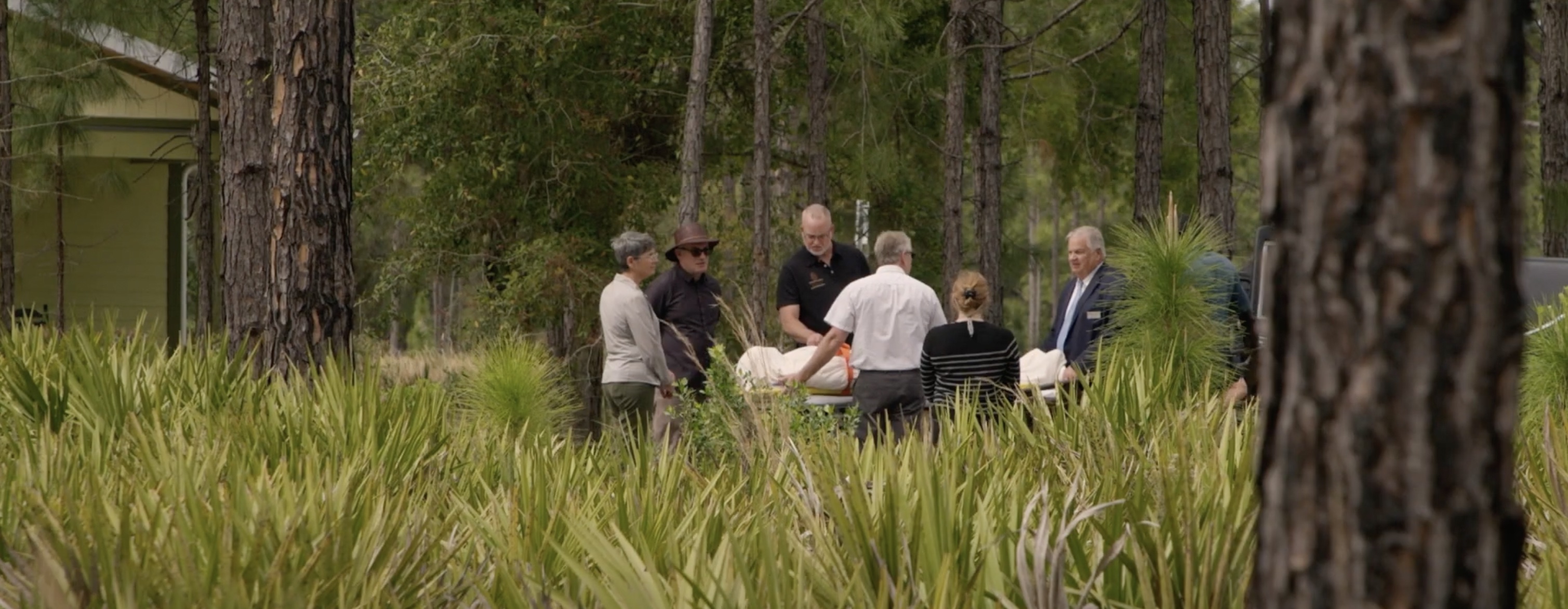
In 2020, I conducted various interviews as part of a short documentary about natural burial, entitled Dust to Dust.
During the course of this research, I identified a few key themes that help facilitate grief: choice, control, and acceptance.
In a conversation with Stacey Campbell, Tallahassee Cemetery Management, she noted that preservation helps offer a sense of control in a moment defined by impermanence. But for some, like the Abbott Family (featured in the documentary's opening scene), the thought of their loved one returning to the earth was healing.
Thesis
There is not one correct way to grieve or honor memory, it is subjective and influenced by individual and cultural experiences. Often, it involves cycles of embracing permanence and impermanence, and results in things both released and held onto. By developing alternative tools and therapies, we can facilitate a healthy grieving process that embraces these cycles, and in turn affect how we relate to life, the planet and ourselves.
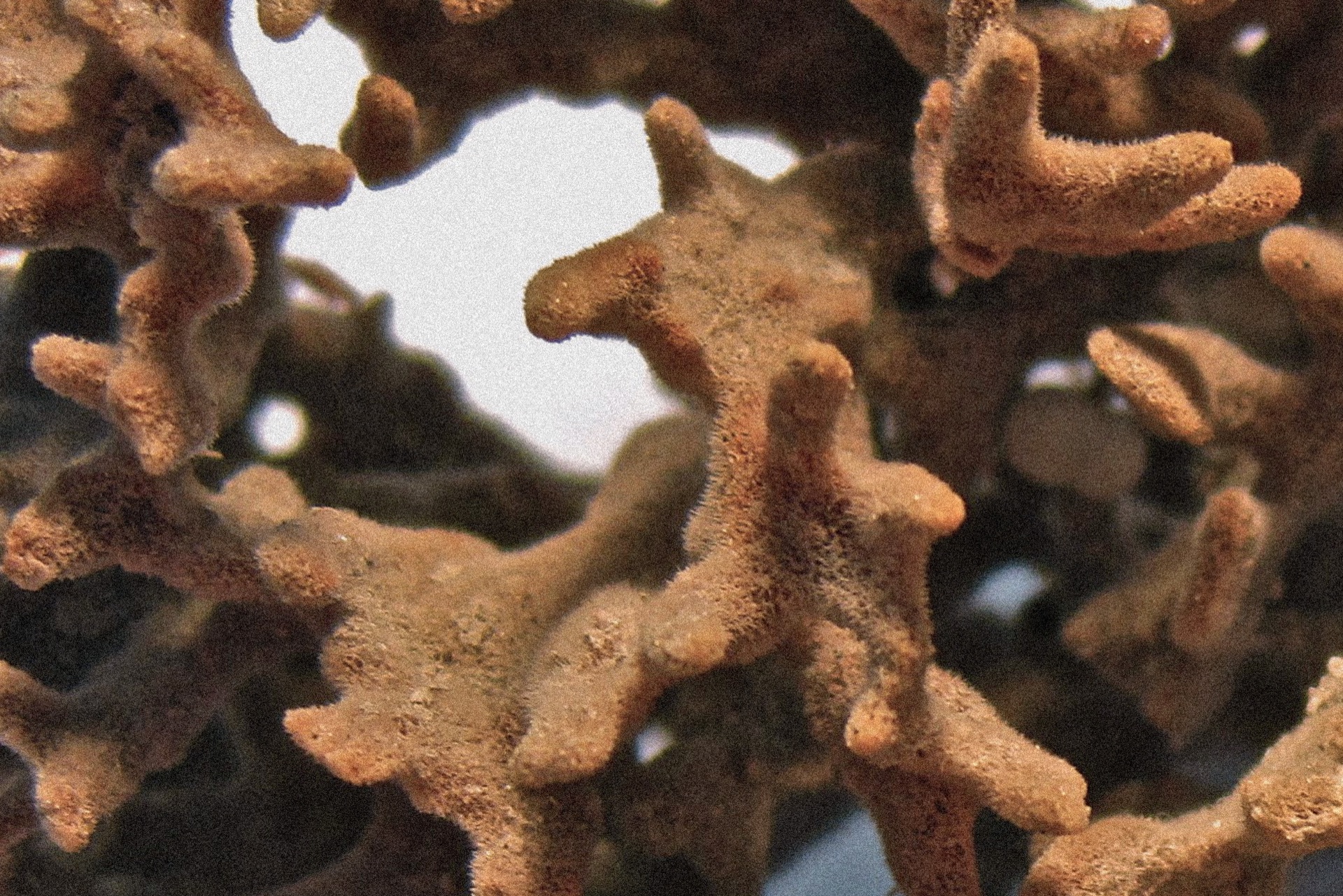
Material Development
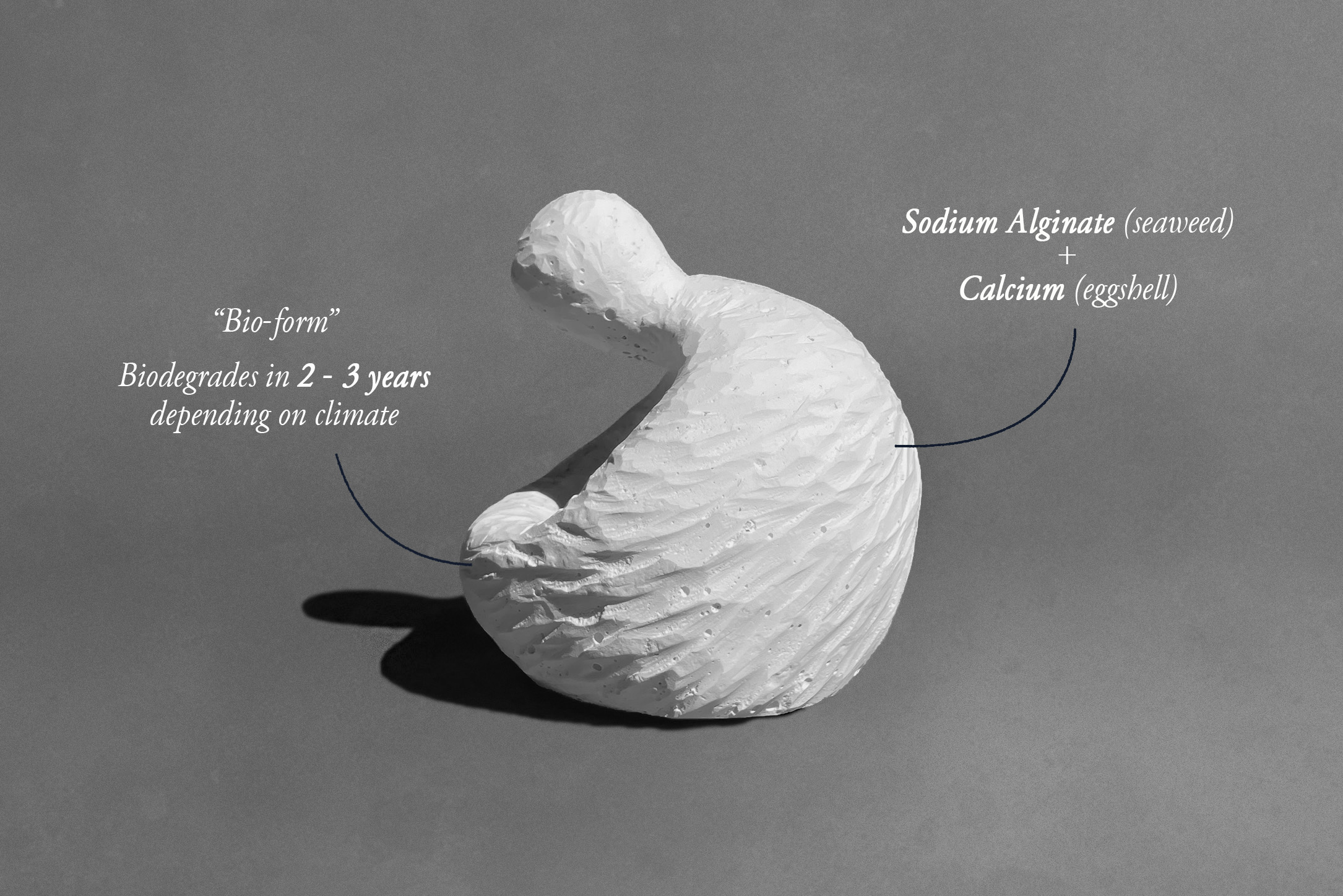
The materials were adapted from an open-source recipe by Midushi Kochhar. We hope to control each material's decomposition rate through natural additives and heat treatment.
We experimented with three types of materials: bio-ceramic (fired), bio-form (unfired, without additives), and bio-structure (unfired, with dried natural fiber additives).
Each form contains native plant seeds, which we hope will germinate and grow when the object has fully decomposed in 1-2 years.
Progress & Next Steps
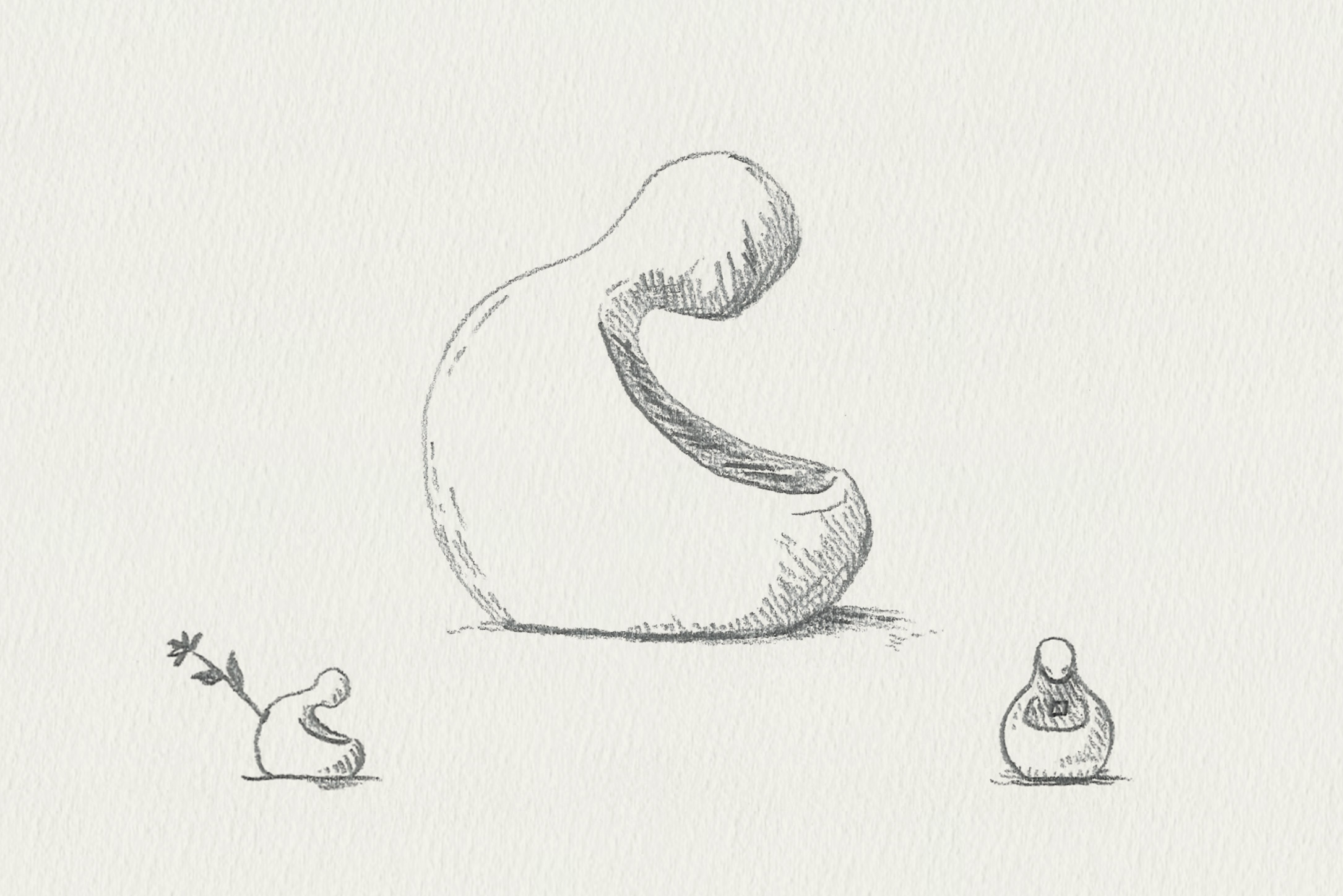
The Vessels is currently in a development phase, with ongoing experiments in twin forms: one ceramic vessel designed to endure and one bio-based vessel designed to decay. These material studies explore how permanence and impermanence might coexist within rituals of grief.
We will continue to monitor the materials and document their decay over time. As our research evolves, we will refine the object forms. We are open to collaborations with natural burial spaces or academic partners interested in material cycles and ritual design (for collaborations and press, please email info@kateander.com).